
All Activity
- Today
-
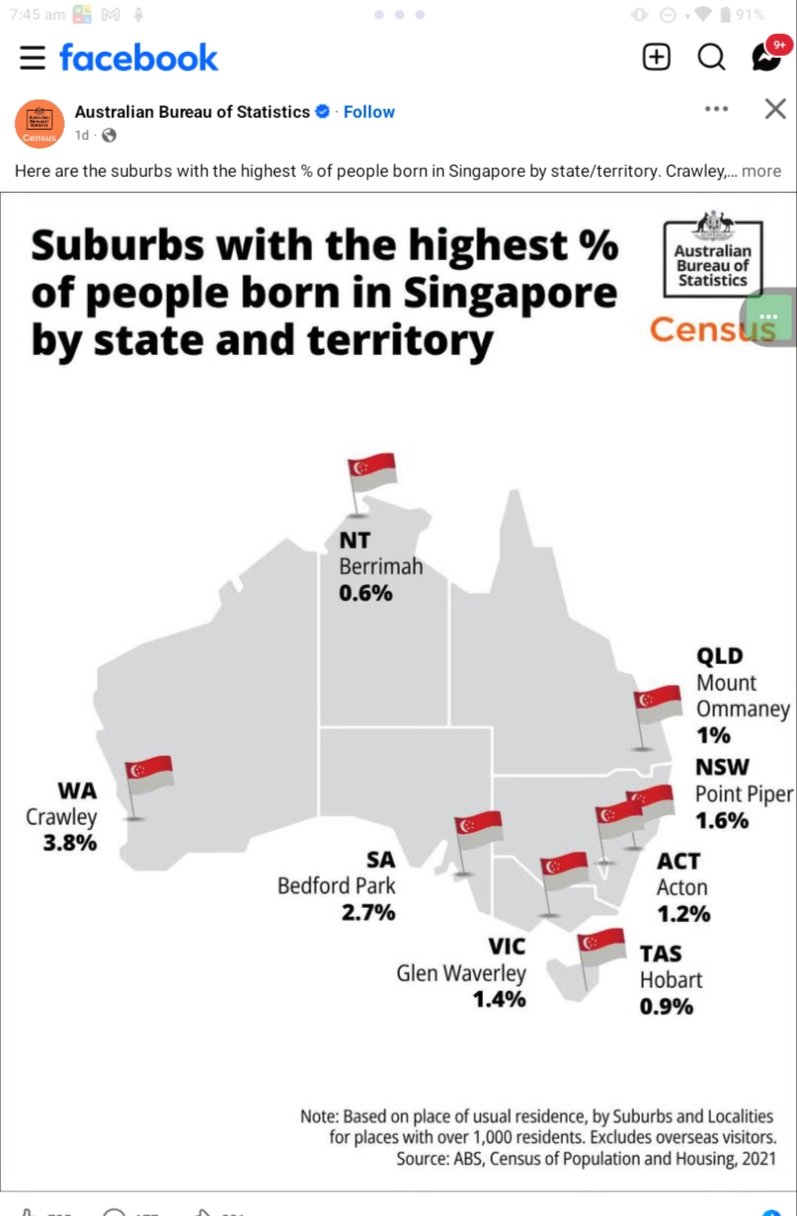
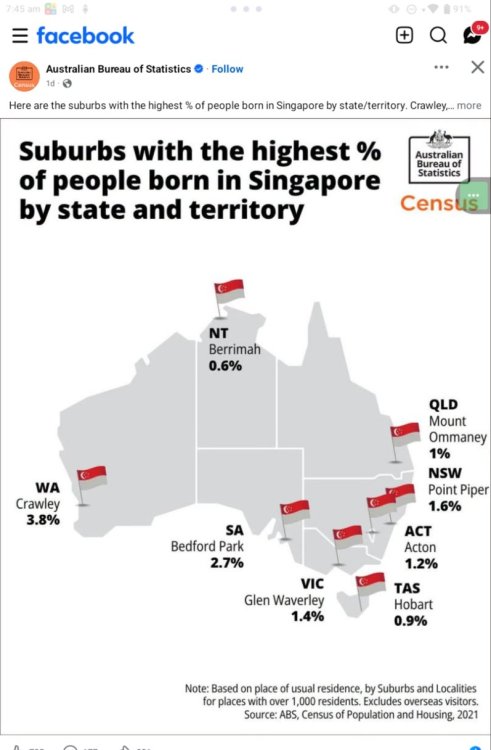
Suburbs with the highest % of people born in Singapore by state and territory in Australia Source & Credit:
-
Source & Credit:
- Yesterday
-
-
-
-
-
-
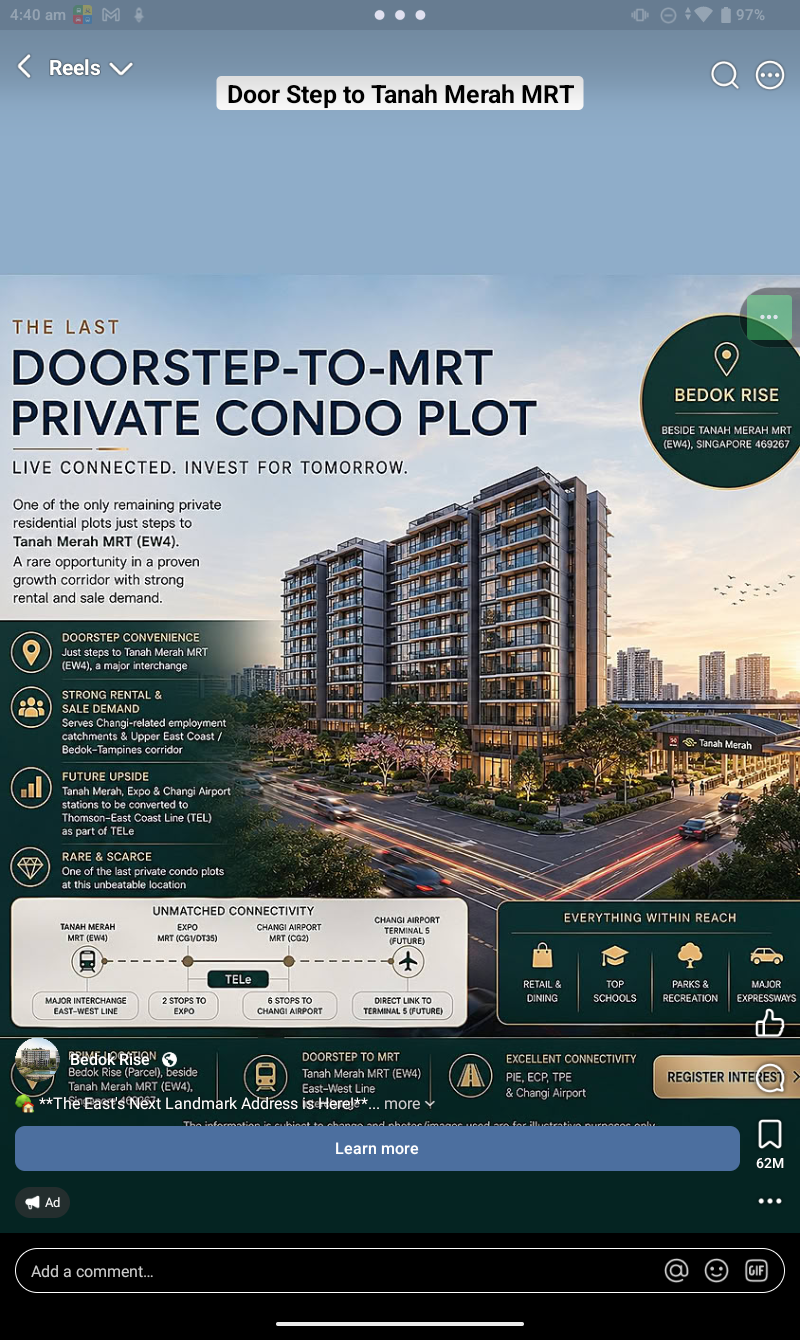
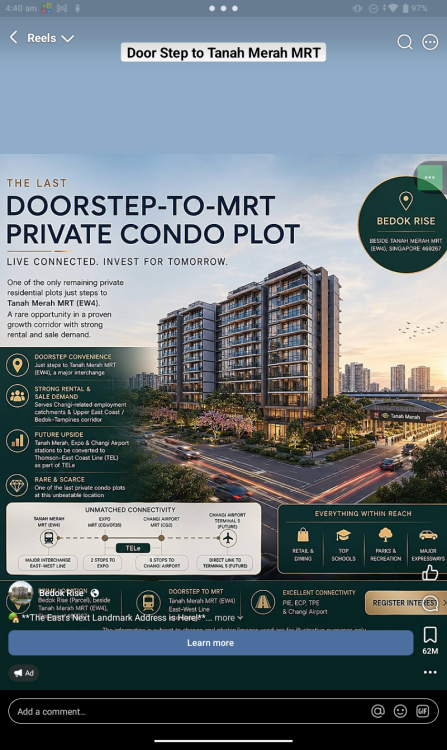
AD 5 ## Image 5/10: “Bedok Rise” — “The last doorstep-to-MRT private condo plot” (Tanah Merah MRT) ### 1) Persuasive elements (how it tries to convince) - Scarcity + exclusivity hook: “THE LAST DOORSTEP-TO-MRT PRIVATE CONDO PLOT” creates urgency and FOMO (“if you miss this, there won’t be another”). - Location-as-safety narrative: Repeats “doorstep to Tanah Merah MRT” and shows a transit map—positions connectivity as the core “fundamental.” - Investor framing: “Invest for tomorrow,” “future upside,” and airport/Expo connectivity cues target appreciation + rental demand expectations. - Demand storytelling: “Strong rental & sale demand” tied to “Changi-related employment catchments” builds a plausible tenant/buyer base. - Comprehensiveness-by-icons: “Everything within reach” (retail, schools, parks, expressways) makes it feel like a complete lifestyle proposition with minimal reading. - Polished render + premium layout: The building visual + clean infographic style increases perceived legitimacy and project quality. ### 2) Critical issues / what’s missing (credibility gaps) - “Last / one of the only remaining” needs substantiation: These are strong superlatives without evidence or definition (last in what radius? last in D16? last for private GLS?). - Speculative infrastructure claims: Mentions future rail/Terminal 5 linkage and line changes—timelines and final routing can change; no source or date reference. - No core buyer decision details: Price/psf guidance, tenure, developer, TOP timeline, unit mix, maintenance fees, and nearby competing supply are absent. - Downside factors omitted: Noise (MRT/expressways), aircraft flight paths (near Changi), traffic, views, plot constraints, and “doorstep” trade-offs (privacy) aren’t acknowledged. - Render vs reality: The hero image is a visualization; no disclaimer about artist impression/subject to approvals is visible in the creative. - Lead-gen transparency: CTA implies registration; no clarity on what you’ll receive and how your contact will be used. ### 3) Click encouragement mechanics (does it push action?) - Very direct relevance trigger: Anyone who cares about MRT proximity will immediately self-select into clicking. - Low cognitive load: Big headline + a few “benefit blocks” (convenience, demand, upside, scarcity) makes the case in seconds. - Dual CTAs reinforce action: “REGISTER INTEREST” + “Learn more” reduce ambiguity about next steps. - Map-based confidence boost: The transit diagram and “stops to” framing feels concrete, making users more willing to click even without pricing. ### 4) Overall take (effectiveness + trust) - Click potential: High, especially for MRT-first buyers/investors and people browsing launches. - Trust: Moderate. The location anchor is tangible, but the “last/rare” superlatives and forward-looking infrastructure upside read like marketing unless sourced. - Best improvement: Add one credibility strip: tenure + expected launch/TOP + a sourced note for rail/Terminal 5 claims (or soften language to “planned/proposed”), plus a small disclaimer for artist impression.
-
AD 4 ## Image 4/10: Thomson Reserve — “Get the Project Comparison Report” / “Look at the Fundamentals” ### 1) Persuasive elements (how it tries to convince) - “Research-first” positioning: “Evaluating Thomson Reserve? Look at the Fundamentals.” frames the advertiser as analytical and buyer-aligned (not just selling). - Lead-magnet authority: “Project Comparison Report” implies insider-quality diligence and benchmarking—borrows credibility from the format of professional research. - Structured evaluation checklist: The 5-item stack (Exit potential, Future appreciation, MRT connectivity, Owner-occupier demand, District fundamentals) gives a neat, rational framework that feels comprehensive. - Premium visual cues: Dark maroon + gold, glossy “stack” and a miniature building model signal high-end / prime quality and seriousness. - Implicit promise of upside: “Exit potential” + “future appreciation” are investor-trigger words; it suggests there’s a defensible growth thesis to uncover. - Price anchoring (caption): “$2,700+ PSF… room left for future growth?” uses a specific price point to create a concrete valuation question that the report supposedly answers. ### 2) Critical issues / what’s missing (credibility gaps) - No actual comparison shown: It promises a “comparison report” but provides no preview (which competing projects, what metrics, what scoring method). - No definitions or data inputs: - “Exit potential” could mean liquidity, future supply, buyer pool depth, or historical resale spread—unclear. - “Future appreciation” is inherently uncertain; no assumptions (rates, holding period, scenario ranges). - No evidence of expertise or sourcing: No mention of data sources (URA caveats, pipeline supply, rental demand), analyst credentials, or track record. - No conflict/independence disclosure: If this is produced by a party selling units/leads, the “fundamentals” frame may not be neutral. - Missing buyer-relevant specifics: Tenure, unit mix, nearby competing supply, timelines, developer, maintenance fees, and key pros/cons are absent in the creative. - Privacy/lead capture clarity: “Free report” typically means form-fill; no indication of what happens after you submit details. ### 3) Does it encourage a click? (click mechanics) - Clear CTA + repeated prompt: “Get the Project Comparison Report” and “GET YOUR FREE…” plus the platform “Learn more” button—low ambiguity about next action. - Curiosity gap tied to valuation anxiety: The implied question (“$2,700+ psf—still upside?”) is a strong click driver for anyone considering this launch. - Low-friction value exchange: “Free report” feels like a safe first step versus “book an appointment.” - Strong visual hierarchy: Big headline + CTA button stand out quickly in a fast-scrolling Reels environment. ### 4) Overall take - Click effectiveness: High. It’s a clean, premium-looking lead magnet with a clear next step and a relevant valuation hook. - Trust impression: Moderate. The “fundamentals” framing helps, but credibility would jump with one concrete preview (sample table/metrics) + data-source note + disclosure of affiliation. - Best improvement: Add a mini snapshot (e.g., 3 comparable projects + 4 metrics) and a small footnote like “Based on URA caveats / pipeline data as of [month]” to make the “report” feel real. --- ### Progress + what I need next You’ve shared 4/10. Upload Ads 5–10, and after all 10 I’ll produce: - 5.1 General ranking (overall best) - 5.2 Two weighted rankings: - By click-likelihood (hook, CTA clarity, friction, visual hierarchy) - By trust (evidence, transparency, definitions, balance, disclosures)

-
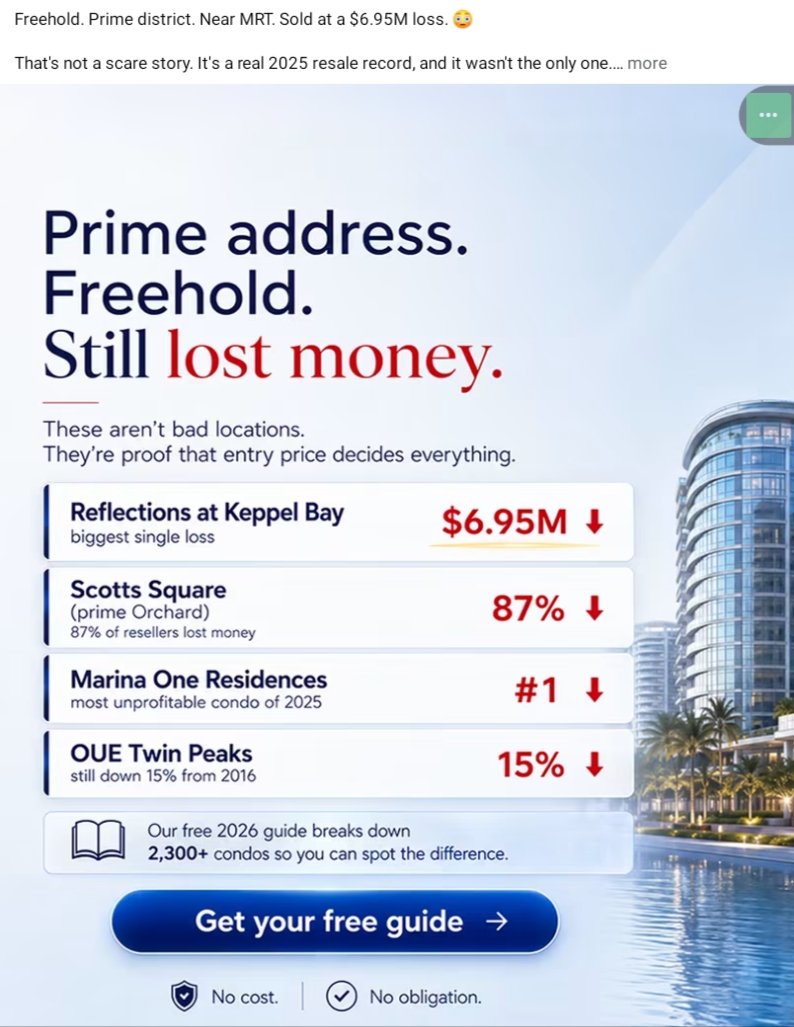
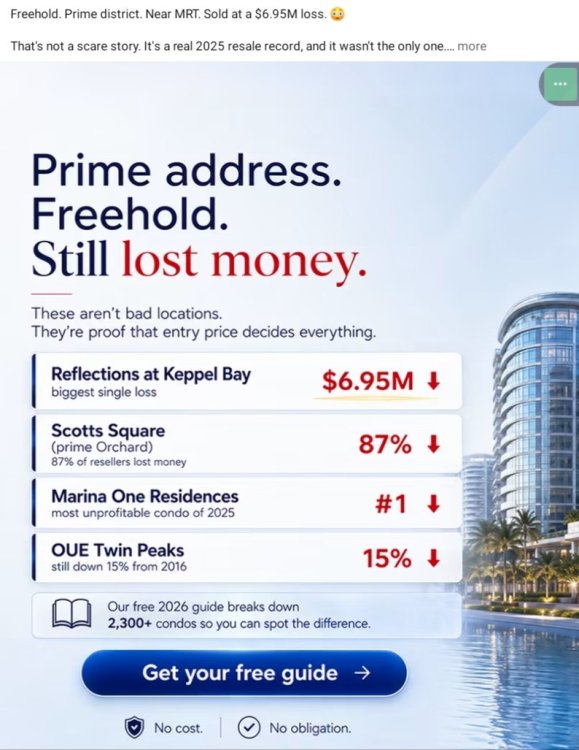
AD 3 ## Image 3/10: “Prime address. Freehold. Still lost money.” + resale loss examples + “Get your free guide” ### 1) Persuasive elements (how it tries to convince) - Pattern-break headline: “Prime address. Freehold. Still lost money.” challenges a common belief (“prime + freehold = safe”), grabbing attention through contradiction. - Fear + loss aversion: Emphasizes downside (“lost money”, red down arrows, big negative numbers). This taps into the stronger emotional impact of losses vs gains. - Data/authority signaling: Names specific projects and cites concrete-sounding metrics (e.g., “$6.95M”, “87% of resellers lost money”, “most unprofitable condo of 2025”). Specificity makes it feel research-backed. - Reframing the lesson: “Entry price decides everything” offers a simple takeaway that positions the advertiser as guiding you to avoid a costly mistake. - Social proof via scale: “Breaks down 2,300+ condos” implies breadth and comprehensiveness (“we’ve analyzed the whole market”). - Trust softeners: “No cost. No obligation.” reduces perceived risk of engaging. ### 2) Critical issues / what’s missing (credibility gaps) - No sourcing or methodology - Where do the resale records come from (URA caveats, data vendor, internal database)? - What’s the definition of “loss” (nominal vs real; includes BSD/ABSD, agent fees, maintenance, renovation, interest costs)? - Selection/cherry-picking risk - Highlighting extreme losers can be true yet unrepresentative. Missing: how many prime/freehold projects did make money, and under what entry prices/timeframes. - Time horizon ambiguity - Loss outcomes depend heavily on buy year, holding period, and market cycle; the ad doesn’t show purchase dates or distribution over time. - Metric clarity issues - “87% of resellers lost money” needs: sample size, date range, which stack/unit types, and whether it’s only 2025 resales. - “Most unprofitable condo of 2025” needs a clear ranking method and dataset coverage. - Context missing - Were losses due to buying at launch peak pricing, unusually large units, premium stacks, or one-off distressed sales? - No comparison to area-wide benchmarks (district averages, index performance). - Lead-gen intent not disclosed - The “free guide” likely involves contact capture; no privacy/usage note. ### 3) Click encouragement mechanics (does it push action?) - High curiosity + anxiety trigger: If “prime/freehold” can lose money, users feel uncertainty and want the “rule” to avoid it—strong motivation to click. - Concrete promise: “Free 2026 guide” + “2,300+ condos” suggests the click yields a substantial, practical asset. - Low-friction CTA: Large button “Get your free guide” + “No cost / No obligation” reduces resistance. - Specific examples create urgency: Seeing recognizable project names + big red declines makes the risk feel immediate and real, nudging action. ### 4) Overall take (effectiveness + trust) - Very strong attention and click potential due to contrarian headline + dramatic loss figures + clear CTA. - Trust is mixed: The ad looks data-driven, but without definitions, sources, and context it risks being perceived as cherry-picked fear marketing. - Best improvement (for credibility without killing conversions): - Add a small “How we calculate loss” footnote (fees included/excluded, time window). - Cite data source (e.g., “based on URA caveats from [date range]”). - Add one balancing stat (e.g., % profitable vs unprofitable in same segment) to reduce cherry-pick skepticism. --- ## Rankings across all 10 ads You asked for: - General ranking - Ranking by clicks - Ranking by trust I can do those once all 10 images are provided. Right now I’ve analyzed 3/10 (Ads 1–3). Upload Ads 4–10 (batch is fine), and I’ll return: 1) Per-ad analysis (same structure) 2) Overall best-to-worst (general) 3) Click-likelihood ranking (CTA clarity, hook strength, friction, visual hierarchy) 4) Trust ranking (evidence, transparency, definitions, balance, disclosures)
-
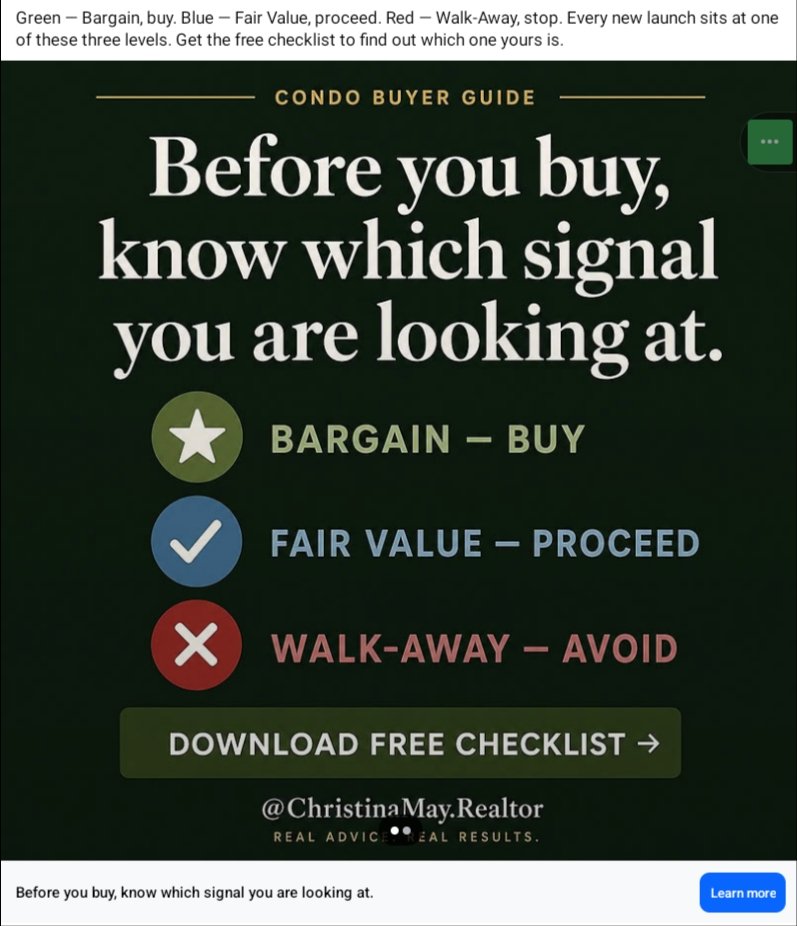
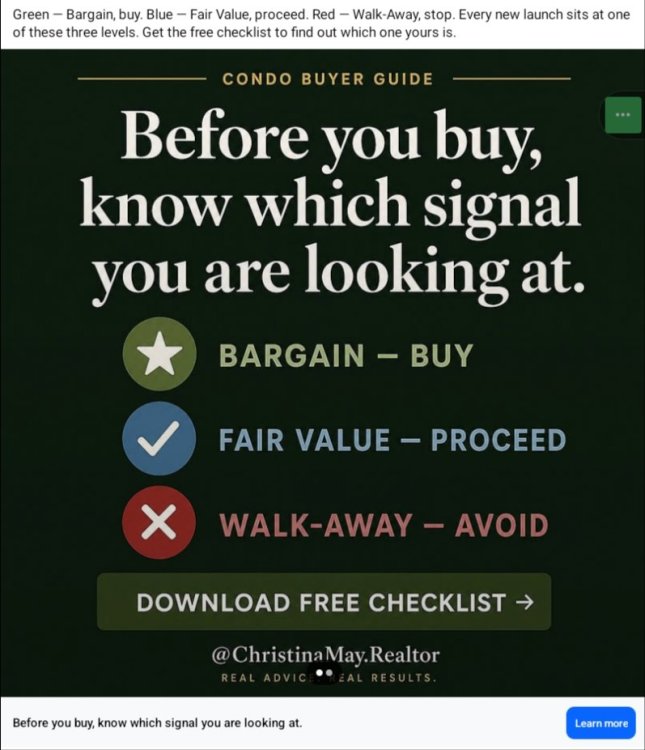
AD 2 ## Image 2/10: “Condo Buyer Guide” — traffic-light signals + “Download free checklist” ### 1) Persuasive elements (how it tries to convince) - Simple decision heuristic: Red/blue/green turns a complex purchase into an easy mental model (“bargain / fair / avoid”). This reduces uncertainty and makes the offer feel actionable. - Loss-aversion framing: “Before you buy…” implies you could make a costly mistake if you don’t follow this guide. - Authority cues: “CONDO BUYER GUIDE” positions the creator as an educator/expert rather than a salesperson. - Visual salience: Large headline + big icons (star/check/X) make the message instantly scannable in a feed. - Value-first offer: “DOWNLOAD FREE CHECKLIST” suggests you get something useful without commitment (classic lead magnet). - Trust-by-branding: Handle + tagline (“REAL ADVICE. REAL RESULTS.”) attempts to establish credibility and consistency. ### 2) Critical issues / what’s missing - No criteria shown: The ad doesn’t explain what qualifies as bargain vs fair vs walk-away (pricing vs location vs developer vs layout vs financing). - Over-simplification risk: Condos rarely fit neatly into 3 buckets; “avoid” is a strong claim without nuance (time horizon, buyer profile, liquidity needs). - No proof of expertise: No credentials, track record, case studies, or references to data sources. - No preview of the checklist: Even 3 bullet examples (“comp price check, supply pipeline, rentable yield”) would reduce skepticism. - Potential conflict of interest not disclosed: If the checklist leads into an agent funnel, users may want transparency. - No privacy expectation: “Download” implies lead capture, but there’s no mention of what happens to your contact details. ### 3) Does it encourage a click? (click mechanics) - Strong CTA + low friction: “Download free checklist” is clear and immediately beneficial. - Curiosity gap: It hints at a system (“signals”) without revealing the rules—people click to find out “which one am I looking at?” - Urgency by timing: “Before you buy” places the content right at a decision point, increasing relevance. - Platform-native prompt: The “Learn more” button reinforces the next step. ### 4) Overall take - High click potential, especially for first-time buyers or anyone anxious about overpaying. - Moderate trust at best as-is: it feels like a smart lead magnet, but credibility is thin because it doesn’t show the underlying framework or evidence. - Best improvement: Add a micro-preview (3–5 checklist items), one credibility marker (years/transactions/credential), and a brief privacy note (“no spam, unsubscribe anytime”). --- ## Next: I can repeat this for the remaining images once you upload them You asked for the “next 9 more images” and overall rankings at the end. At this point I’ve analyzed 2/10, so I still need Images 3–10 (8 more images). When you upload the rest, I’ll deliver: - Per-image analysis (same 4 sections) - 5.1 General ranking (best overall) - 5.2 Two weighted rankings: - By click-likelihood (CTA clarity, curiosity gap, relevance, friction, visual hierarchy) - By trust (specificity, evidence, transparency, realism, disclaimers/assumptions)
-
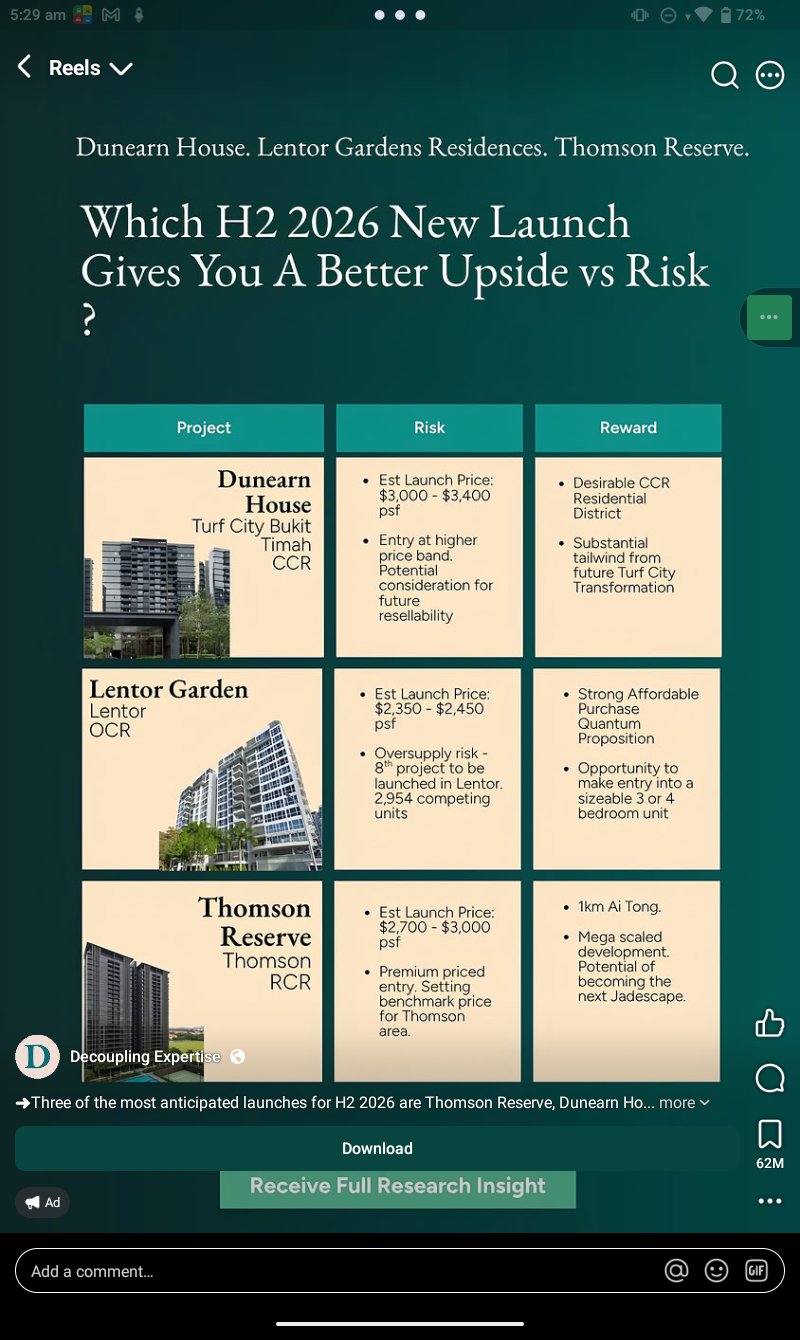
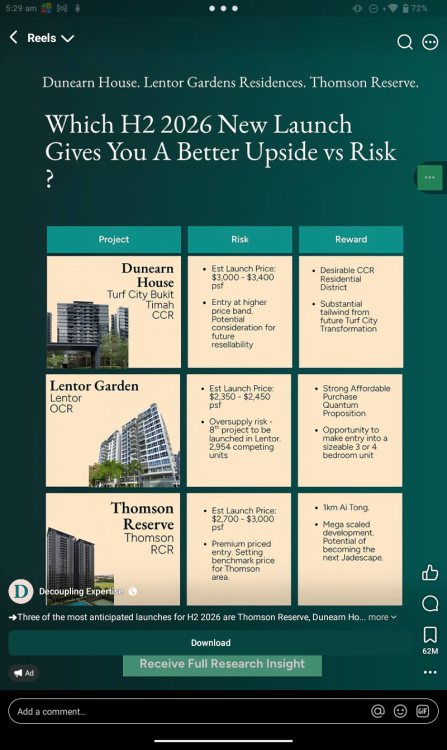
AD 1 ## Image 1/10 (PNG): IG Reels ad comparing 3 H2 2026 launches ### 1) Persuasive elements (what it’s doing to convince you) - High-clarity framing: The headline sets a simple decision problem: “better upside vs risk”—a classic investor mental model. - Authority by specificity: Uses exact-sounding price bands (“$3,000–$3,400 psf”, etc.), project names, and region labels (CCR/OCR/RCR) to signal expertise. - Side-by-side comparison table: Reduces cognitive load; makes the ad feel analytical rather than promotional. - Balanced language cues: Includes both “Risk” and “Reward” columns—creates an impression of objectivity even if the inputs are subjective. - Anchoring + segmentation: Three tiers (CCR/OCR/RCR) implicitly map to different budgets/risk appetites, widening appeal. - Future catalyst storytelling: Phrases like “tailwind from future transformation” and “potential of becoming the next …” evoke narrative upside rather than evidenced projections. ### 2) Critical issues / missing information (what you’d need to judge it properly) - No sources or methodology - Where do the estimated launch prices come from? - How were “oversupply risk” and “benchmark price setting” quantified? - No time horizon clarity - “Upside” over 1 year? 3 years? 10 years? Risk depends heavily on holding period. - No definition of “risk” - Is risk: downside price volatility, rental vacancy, exit liquidity, policy risk, interest-rate sensitivity, developer risk, construction timeline risk? - Cherry-picking / narrative risk - “Potential of becoming the next …” is a strong persuasive claim without data (comparables, pipeline supply, historical uplift). - Missing comparable evidence - No nearby transaction comps, resale trends, rent yields, absorption rates, or pipeline launches beyond one oversupply bullet. - No disclosure of conflicts - If this is from an agent/marketing group, they may benefit from leads/sales. The ad doesn’t disclose compensation or affiliations. - Product details absent - Unit mix, land tenure, plot ratio, developer track record, maintenance fees, school proximity nuances, transport access, and exact address/context are not shown. - No uncertainty/disclaimer - “Est launch price” and macro factors are inherently uncertain; the ad presents them as crisp decision inputs. ### 3) Click encouragement mechanics (how it pushes action) - Curiosity gap: “Which one gives better upside vs risk?” invites a resolution that the post does not fully provide. - CTA placement + repetition: Bottom bar shows “Receive Full Research Insight” and “Download”—clear next step. - Lead magnet positioning: “Full research” implies the current content is a summary; clicking promises the “real answer.” - Time-based hook: “H2 2026 New Launch” suggests freshness and planning ahead, nudging proactive clicking. ### 4) Overall take (effectiveness + trust impression) - Effective for clicks: The ad is structured like a mini research brief, which tends to perform well for property/investment audiences. - Moderate-to-low trust without substantiation: The “research” tone is persuasive, but the absence of sources, assumptions, and disclosures makes it feel like marketing wrapped in analysis. - Best use: As a starting shortlist or conversation prompt—not as decision-grade guidance. --- ## Next step: I can’t analyze Images 2–10 yet You asked for the same analysis for 9 more images and then final rankings (overall, by clicks, by trust). Those images aren’t available in this chat right now. ### Please upload Images 2–10 (one by one or in a batch) Once I have all 10, I will provide: 1) Per-image analysis (persuasion, missing info, click drivers, overall take) 2) General ranking (best overall) 3) Ranking by click-likelihood 4) Ranking by trust / credibility If you want the rankings to match your goal, tell me the audience and objective: - Audience: investors vs owner-occupiers vs agents? - Objective: maximize clicks, maximize qualified leads, or maximize trust/brand lift?
- Last week
-
ampera joined the community
-
williamfong joined the community
-
Other Related Property Articles SG Property Article 1: The 3 Certainties of Property Transformation: A Professional Framework for Timing Your Entry https://www.geomancy.net/forums/topic/20897-the-3-main-signs-of-property-change-when-to-step-in-and-buy/ SG Property Article 2: A practical pro and cons review of how Singapore poperty is often assessed and sometimes marketed by real estate agents https://www.geomancy.net/forums/topic/20898-a-practical-pro-and-cons-review-of-how-singapore-property-is-often-assessed-and-sometimes-marketed-by-real-estate-agents/ SG Property Article 3: Boutique condos in Singapore are often ignored https://www.geomancy.net/forums/topic/20904-boutique-condos-in-singapore-are-often-ignored-because-most-buyers-focus-on-big-high-unit-projects-but-they-can-offer-strong-long-term-value/ SG Property Article 4: BTO is coming, so when should you sell? https://www.geomancy.net/forums/topic/20903-bto-is-coming-so-when-should-you-sell/ SG Property Article 5: A buyer playbook using MAPS Investment screening process https://www.geomancy.net/forums/topic/20900-a-buyer-playbook-using-maps-investment-screening-process/ SG Property Article 6: Why 2026 matters for HDB owners who want to upgrade https://www.geomancy.net/forums/topic/20902-why-2026-matters-for-hdb-owners-who-want-to-upgrade-to-private-property-without-depleting-personal-savings/ SG Property Article 7: Is your HDB a starting point for upgrading to private property? https://www.geomancy.net/forums/topic/20908-sg-property-article-7-your-hdb-is-your-starting-point/ SG Property Article 8: Reckless housing land bids? https://www.geomancy.net/forums/topic/20912-sg-property-article-8-reckless-housing-land-bids/ SG Property Article 9: HDB resale prices post first decline in nearly seven years https://www.geomancy.net/forums/topic/20919-sg-property-article-9-hdb-resale-prices-post-first-decline-in-nearly-seven-years/ SG Property Article 10: Ten Reasons why HDB Homeowners sell their flats https://www.geomancy.net/forums/topic/20942-sg-property-article-10-why-hdb-homeowners-sell-their-flats-and-what-it-says-about-life-in-singapore/ SG Property Article 11: Educational Infographic Ads Designed to Boost Engagement https://www.geomancy.net/forums/topic/20962-sg-property-article-11-educational-infographic-ads-designed-to-boost-engagement/ SG Property Article 12: A critical review of the common unit selection framework https://www.geomancy.net/forums/topic/20899-a-critical-review-of-the-common-unit-selection-framework-made-popular-by-singapore-property-influencers-and-agents/ SG Property Article 13: Condo owners may lose their apartment for owing maintenance charges https://www.geomancy.net/forums/topic/20952-condo-owners-may-lose-their-apartment-for-owing-maintenance-charges/ SG Property Article 14: HDB Lease Decay - By 2030, close to 500,000 HDB flats will be older than 40 years https://www.geomancy.net/forums/topic/20969-sg-property-article-14-hdb-lease-decay-by-2030-close-to-500000-hdb-flats-will-be-older-than-40-years/ SG Property Article 15: Failed “99-1” ownership scheme leads to costly lawsuit, highlighting stricter IRAS scrutiny and risks of trying to bypass Singapore’s ABSD https://www.geomancy.net/forums/topic/20878-sg-property-article-15-failed-99-1-ownership-scheme-leads-to-costly-lawsuit-highlighting-stricter-iras-scrutiny-and-risks-of-trying-to-bypass-singapores-absd/ SG Property Article 16: Star Buy Units in New Launch Condos: What They Really Mean + 5-Factor Checklist to Spot a Genuine Deal https://www.geomancy.net/forums/topic/20994-sg-property-article-16-star-buy-units-in-new-launch-condos-what-they-really-mean-5-factor-checklist-to-spot-a-genuine-deal/ SG Property Article 17: When Should You Sell Your HDB Before getting a New BTO? (The 3-Phase Strategy That Avoids Rental Gaps) https://www.geomancy.net/forums/topic/21010-sg-property-article-17-when-should-you-sell-your-hdb-before-getting-a-new-bto-the-3-phase-strategy-that-avoids-rental-gaps/ SG Property Article 18: Cash vs CPF for Your Home Loan in Singapore: Which Payment Method Leaves You Better Off (Now and When You Sell)? https://www.geomancy.net/forums/topic/21013-sg-property-article-18-cash-vs-cpf-for-your-home-loan-in-singapore-which-payment-method-leaves-you-better-off-now-and-when-you-sell/ SG Property Article 19: Property Market Timing Made Simple: Track Entry Prices, New Launch Benchmarks, and GLS Land Bids https://www.geomancy.net/forums/topic/21015-sg-property-article-19-property-market-timing-made-simple-track-entry-prices-new-launch-benchmarks-and-gls-land-bids/ SG Property Article 20: Singapore Resale Condos Taking Longer to Sell in 2026 as Buyers Hold Back Amid New Launches https://www.geomancy.net/forums/topic/21021-sg-property-article-20-singapore-resale-condos-taking-longer-to-sell-in-2026-as-buyers-hold-back-amid-new-launches/ SG Property Article 21: CCR, RCR, OCR Explained: A Guide to Singapore’s Property Regions https://www.geomancy.net/forums/topic/21029-ccr-rcr-ocr-explained-a-guide-to-singapores-property-regions/ SG Property Article 22: Is This Project Good?” Isn’t the Real Question: The 4-Pillar Framework Smart Property Buyers Use https://www.geomancy.net/forums/topic/21031-sg-property-article-22-is-this-project-good-isnt-the-real-question-the-4-pillar-framework-smart-property-buyers-use/ SG Property Article 24: 9 Singapore Property Facebook Ad Creatives Ranked: Weighted Scoring for Clicks vs Trust (CTR, Lead Quality & What Worked) https://www.geomancy.net/forums/topic/21039-sg-property-article-24-9-singapore-property-facebook-ad-creatives-ranked-weighted-scoring-for-clicks-vs-trust-ctr-lead-quality-what-worked/


-
In Conclusion What to run first (based on the rankings)If you want cheapest clicks (Click-first set): start with Creative 7, then 6, then 3/5. If you want better lead quality (Trust-first set): start with Creative 7, then 3/5, then 6. Where Creative 9 fits (“Second chances in sold-out projects”)It’s a solid mid-pack performer: good for clicks, slightly held back by credibility. Fastest upgrade: add one proof/spec line (e.g., update frequency + what “returned units” means + coverage size). That’s the simplest way to push it up in the trust-weighted ranking.

-
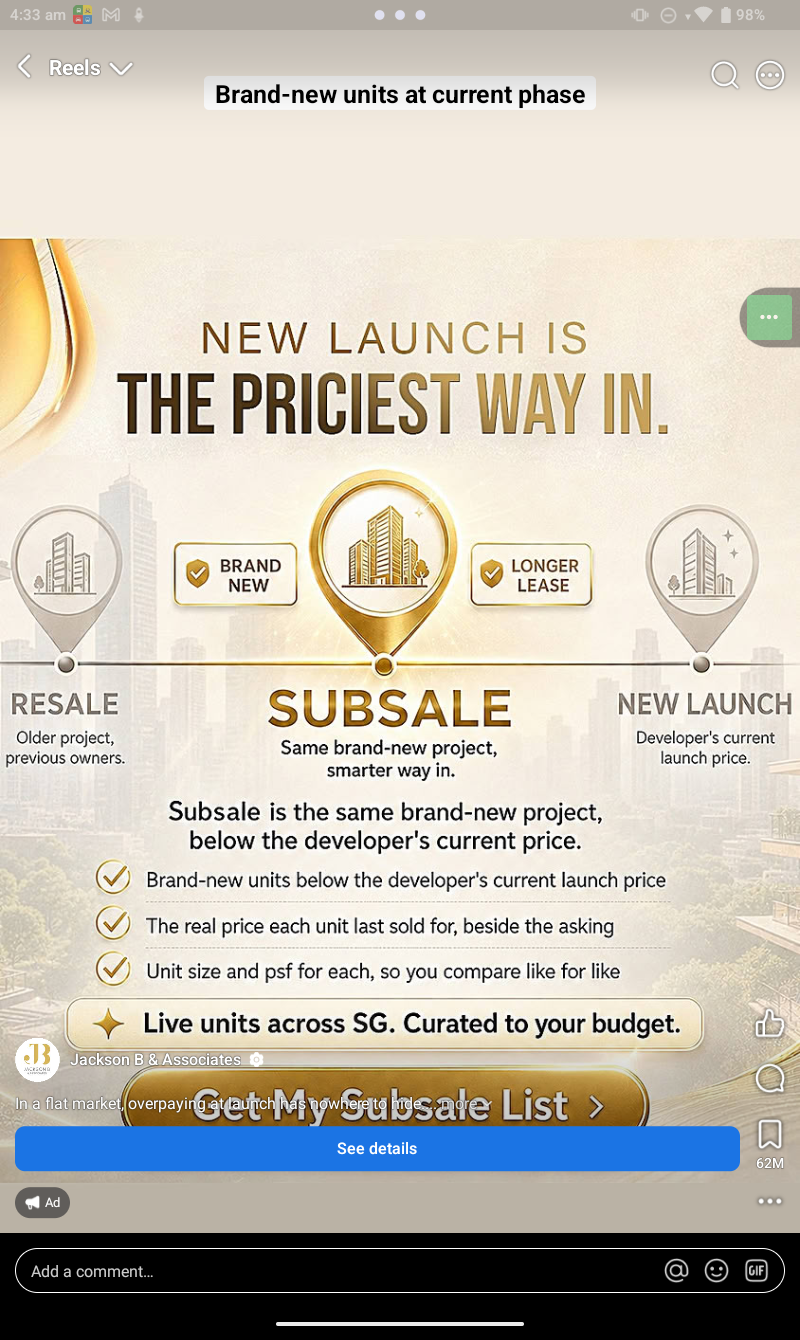
BEST ADS? - WEIGHTED RANKING FOR ALL 9Below is the weighted ranking for all 9 creatives using the two weight sets we discussed: Set A (Click-first): 50% Click Enticement / 25% Trust / 25% Design Set B (Trust-first): 35% Click Enticement / 45% Trust / 20% Design Scores are on a /10 scale. +++ Set A — Click-first ranking (50/25/25)Rank Creative Weighted score 1 AD 7 — Walk-away price (AVOID) 8.00 2 AD 6 — Private watchlist / “locked deals” 7.75 3 (tie) AD 3 — “47%” Jurong/JLD comparison 7.50 3 (tie) AD 5 — Subsale vs launch in flat market 7.50 5 AD 4 — “Showflats are traps” 7.25 6 AD 9 — Second chances in sold-out projects 7.13 7 AD 2 — Hidden/bounce-out inventory 7.00 8 (tie) AD 1 — Dataset/infographic teaser 6.50 8 (tie) AD 8 — Future-demand value-buy list 6.50 When optimized for clicks, the most “decisive” and “insider” angles win (verdict tools, watchlists, strong headline claims). Trust weaknesses don’t hurt as much in this weighting. +++ Set B — Trust-first ranking (35/45/20)Rank Creative Weighted score 1 AD 7 — Walk-away price (AVOID) 7.45 2 (tie) AD 3 — “47%” Jurong/JLD comparison 7.10 2 (tie) AD 5 — Subsale vs launch in flat market 7.10 4 AD 6 — Private watchlist / “locked deals” 7.00 5 AD 9 — Second chances in sold-out projects 6.68 6 AD 4 — “Showflats are traps” 6.65 7 AD 2 — Hidden/bounce-out inventory 6.45 8 (tie) AD 1 — Dataset/infographic teaser 6.10 8 (tie) AD 8 — Future-demand value-buy list 6.10 When optimized for lead quality / believability, creatives with clearer “why/what/how” and less “mystery advantage” rise (comparisons, rationale-driven pieces). The “insider” angles still do well, but they get penalized if proof/specifics are thin.
-
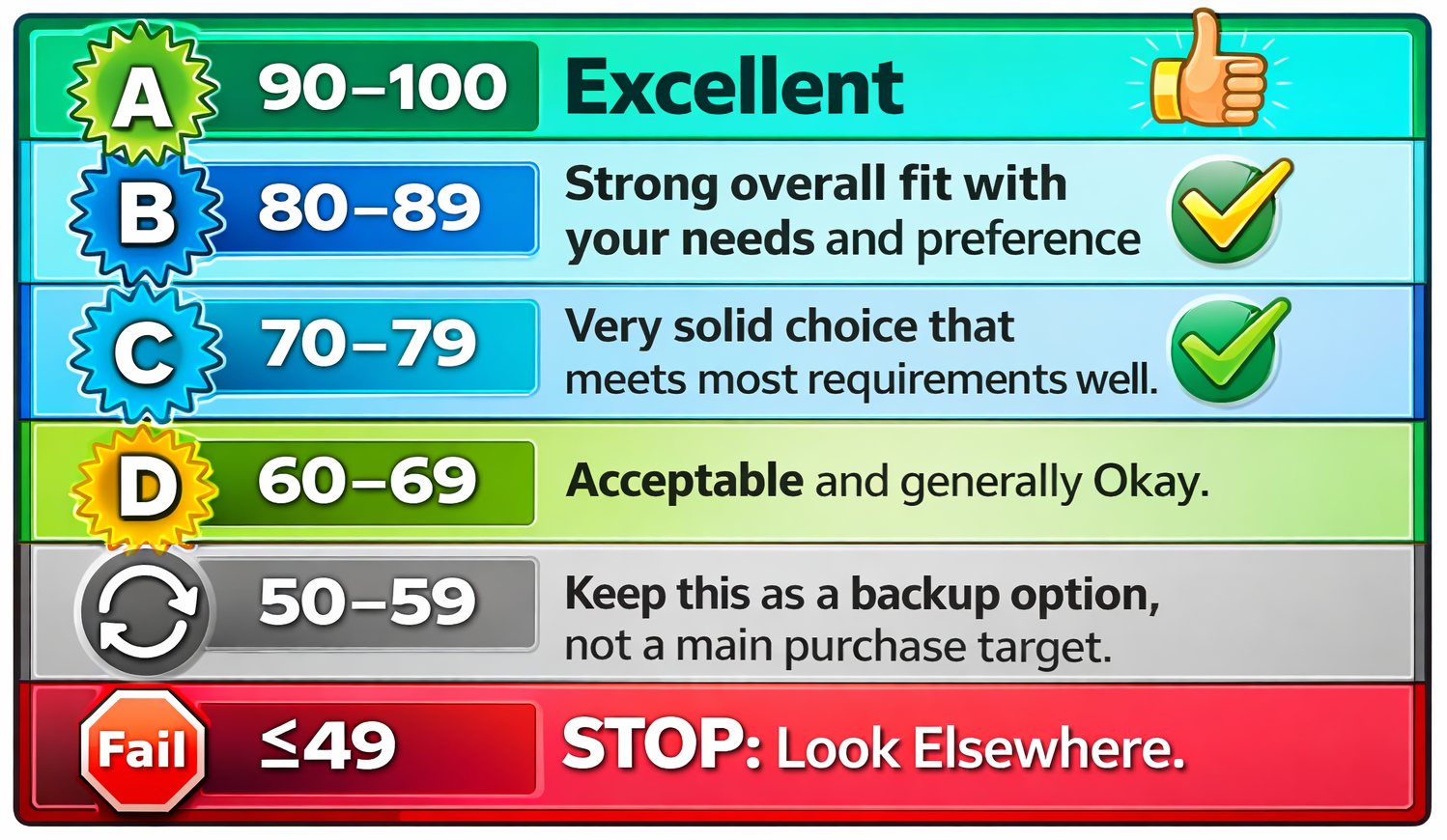
BEST ADS? - GENERAL RANKING Rank (1=best) AD Number Short label Persuasive elements Critical issues (risk) Design effectiveness Overall click enticement 1 AD 4 “Locked” early-access deals + $230K anchor Very strong (exclusivity + big savings number + source-proximity) High (vague definitions, cherry-pick risk, privacy/compliance vibes) Strong premium + clear hierarchy Very high 2 AD 7 “Walk-away price” verdict (AVOID) Very strong (binary verdict + fear of overpaying + “analysis complete”) High (methodology + conflict-of-interest ambiguity) Strong focal + app UI credibility cues Very high 3 AD 5 Subsale “brand-new” vs launch in flat market Strong (macro rationale + simple stat + de-risk bullets) Med–High (oversimplified chart, “flat market” asserted, subsale realities) Strong hierarchy/CTA; premium palette High 4 AD 6 “Showflats are traps” narrative Strong emotional pull (loss aversion, enemy framing) High (fact-light, overgeneralizes) Bold poster readability High (emotion-driven) 5 AD 9 “Sold-out” projects have “second chances” Strong (scarcity reversal + insider timing + concrete bullets) Med–High (source/update proof missing; advantage may be overstated) Cohesive theme; slight mobile density High 6 AD 2 Hidden inventory “not on portals” Strong (exclusivity + timeliness + geography specificity) High (verification problem; thin proof; possible ethics concerns) Clear conversion hierarchy High (trust friction) 7 AD 3 “47%” Jurong/JLD comparison report Strong (single punchy claim + chart metaphor + free report) Medium (what’s compared? time window/sourcing unclear) Clean, scannable, intuitive visual Med–High 8 AD 1 Curiosity/“surveillance” dataset tease Strong intrigue + FOMO Med–High (opacity, loaded categories, low context) Conversion-optimized, low informativeness Med–High 9 AD 8 3–5 year future-demand “value-buy” list Moderate–Strong (aspirational + research implied) Medium (forecasting claim thinly supported; “affordable” vague) Clean “report” vibe; slightly abstract Medium
-
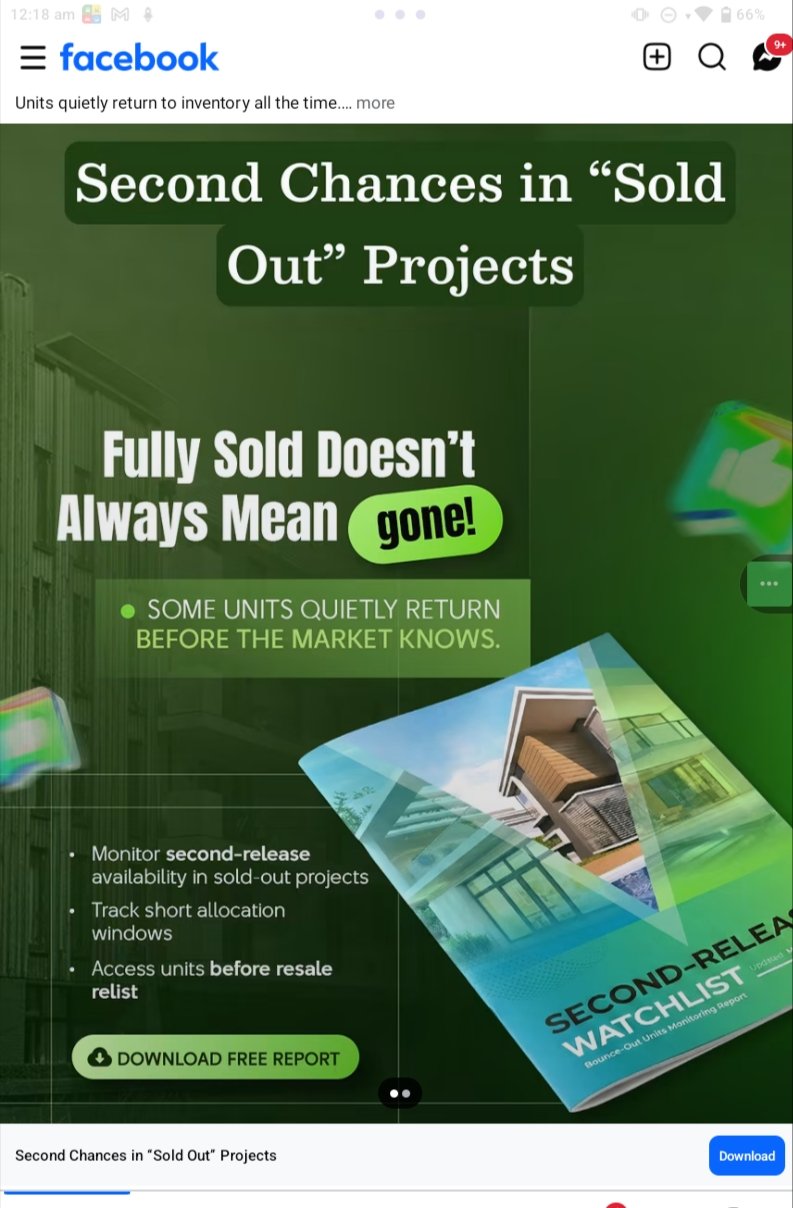
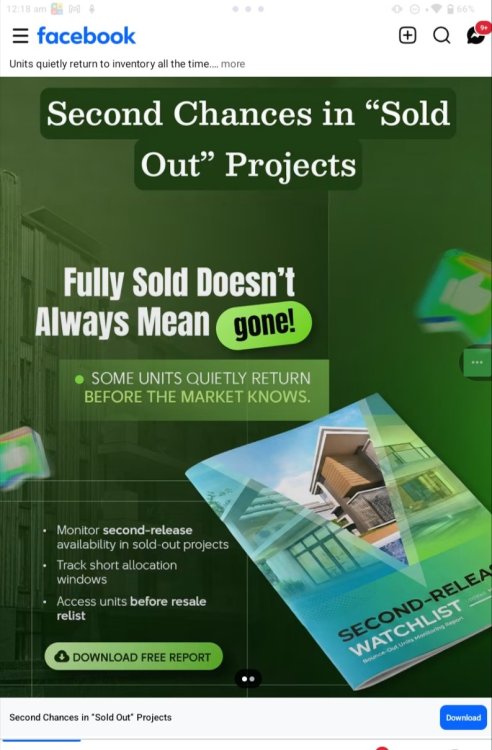
AD NO. 9 Persuasive elements (how it tries to get the click)- “Secret second chance” hook: “Second Chances in ‘Sold Out’ Projects” + “Fully Sold Doesn’t Always Mean gone!” reframes scarcity into an opportunity—people hate missing out, so the promise of a hidden re-entry is very clickable. - Insider / before-the-crowd positioning: “Some units quietly return before the market knows” suggests you’ll get access to information others won’t, triggering exclusivity and urgency. - Clear, practical benefits: The bullets are specific and operational: - monitor second-release availability - track short allocation windows - access units before resale relist These sound like actionable advantages rather than vague “we help you buy better.” - Low-friction lead magnet: “Download free report” reduces commitment and makes the click feel like a safe first step. - Language that fits the category: Terms like “allocation windows,” “second-release,” “watchlist” sound like a system/process, which implies competence and makes it feel less like pure hype. Critical issues / credibility gaps (what a cautious viewer will question)- What counts as “quietly return”? Is this: - bounced cheques / cancelled options, - developer releases held-back units, - failed financing cases, - internal reassignments? Different causes imply different likelihood, pricing, and fairness of access. - How is the watchlist sourced and updated? Viewers may ask: - Is it official developer info, agent networks, scraped data, or manual tracking? - How real-time is it (daily/weekly)? - What’s the coverage (all launches vs selected projects)? - Implied advantage may be overstated: “Before the market knows” suggests a meaningful timing edge, but many “returned” units are circulated quickly within agent/buyer networks anyway. The true edge might be smaller than implied. - Pricing reality is missing: Even if a unit returns, it may not be a “deal” (could be repriced, worst stack, undesirable facing). The ad doesn’t clarify whether the report addresses value, not just availability. - Lead-gen intent: A “free report” often means contact capture and follow-ups. Users may wonder what they must submit and whether the “watchlist” is actually a sales funnel to book viewings. Design & messaging effectiveness- Strong hierarchy: Big headline → “sold out doesn’t mean gone” → single-sentence proof point → bullets → CTA. It’s easy to scan in a feed. - Cohesive visual theme: The green palette + “gone!” sticker creates a clear focal contrast and keeps attention on the core claim. - Book/report mockup boosts tangibility: Showing a “watchlist” cover makes the free download feel like a real asset, not just a form. - Slight density at the bottom: The bullet list is smaller and could be missed on mobile; the most compelling benefit (“which projects / how fast / what you get”) isn’t summarized in one punchy line near the CTA. Does it entice a click?Yes—especially for buyers who recently missed a launch or are actively tracking “sold-out” projects. The combination of scarcity + insider access + free report is inherently click-friendly. The main limiter is trust: it would convert better if it added one concrete clarification, e.g. “updated daily,” “covers X projects,” “includes release alerts + allocation deadlines,” or an example screenshot of what the watchlist contains.
-
Get a Quote Our fees have stayed the same since 1996 Cecil Lee, +65 9785-3171 support@geomancy.net




-
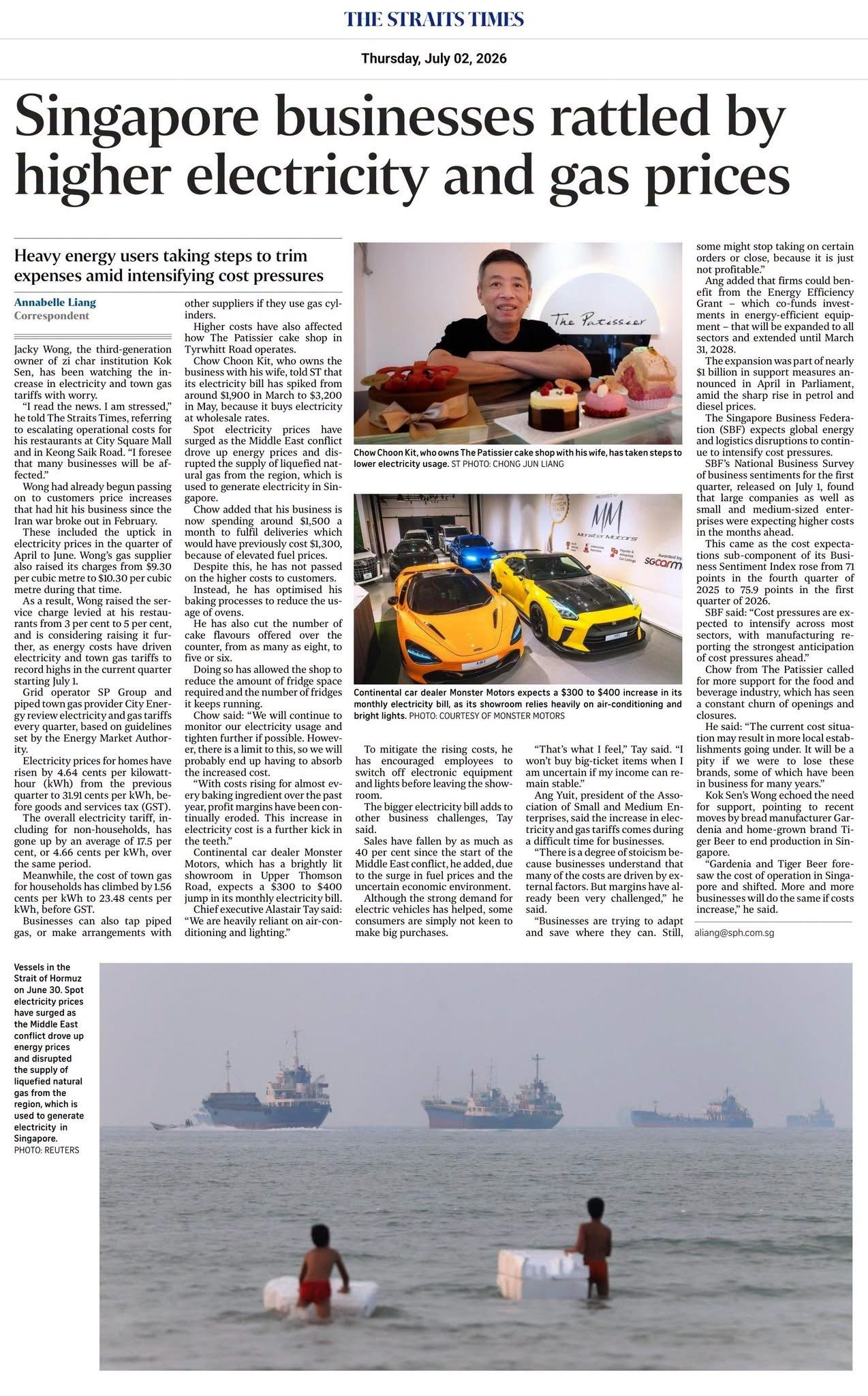
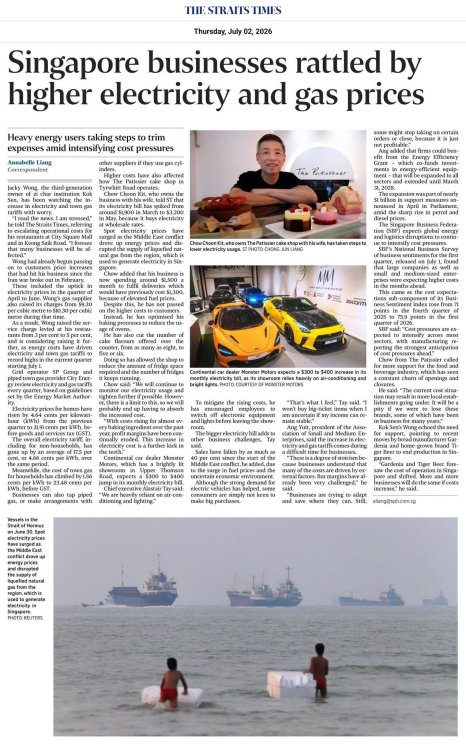
Singapore businesses are feeling a fresh squeeze from higher electricity and gas costs, adding to existing pressures like wages, rent and weak demand in some sectors.How businesses are being affected- Utility bills are rising quarter-on-quarter, especially for energy-heavy operations (restaurants, bakeries, showrooms, factories, cold storage). - Natural gas price volatility matters because Singapore’s power generation relies heavily on gas; global disruptions (including geopolitical tensions affecting LNG supply) can feed into local electricity prices. - Passing costs to customers is hard: some firms have raised prices slightly, but worry that bigger increases will drive customers away or cut demand. - Profit margins are getting thinner, forcing tougher choices—such as scaling back certain offerings/orders, delaying spending, or becoming more cautious about expansion. What businesses are doing to cope (mitigation strategies)- Small, targeted price increases (e.g., modest menu price adjustments) while monitoring customer resistance. - Reducing energy use operationally - Optimising production/baking schedules to use equipment more efficiently. - Cutting non-essential consumption (fewer fridges/freezers running, consolidating storage). - Tightening day-to-day controls: switching off lights/equipment, moderating air-conditioning, reducing after-hours power use. - Switching or renegotiating supply arrangements - Shopping around for better electricity contracts and exploring alternatives where feasible (e.g., different supply setups for cooking fuel). - Seeking productivity improvements to offset higher costs without fully raising prices. - Leaning on government support schemes where eligible (including energy-efficiency co-funding/grants that help firms pay for energy-saving equipment and upgrades). Overall takeawayRising energy prices are pushing Singapore firms to do two things at once: trim consumption aggressively (better processes, stricter controls, equipment upgrades) and carefully adjust prices where the market can tolerate it—while staying cautious because demand may not be strong enough to absorb large increases. Source & Credit
-
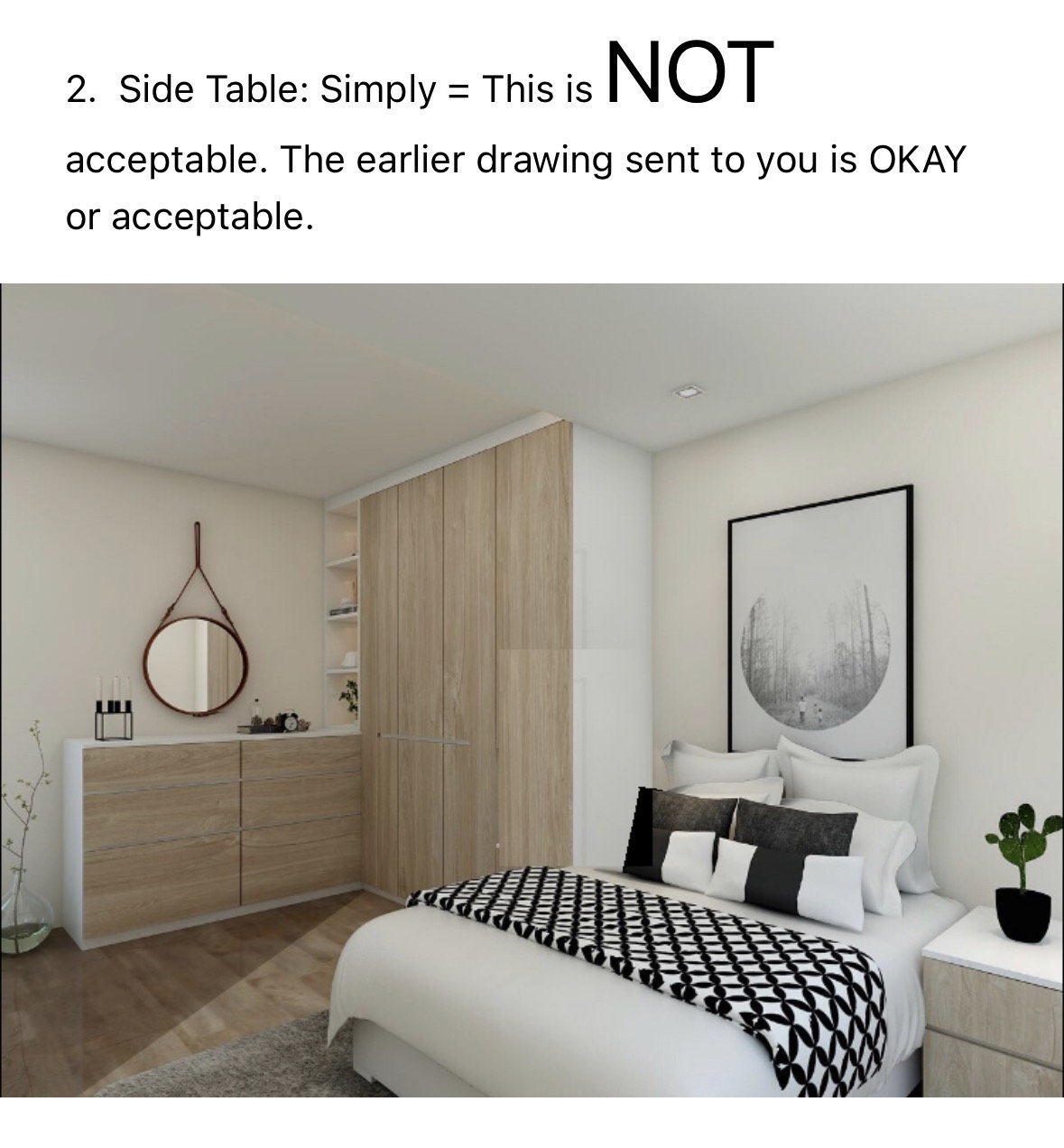
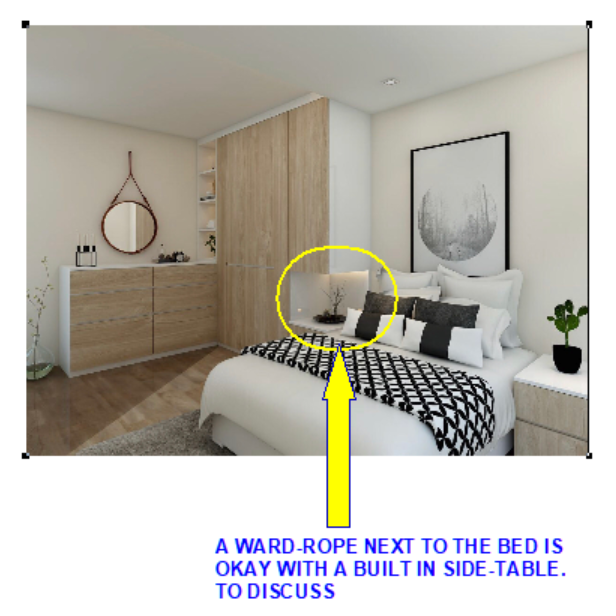
A wardrobe with an indent for a side table is okay or preferred
-
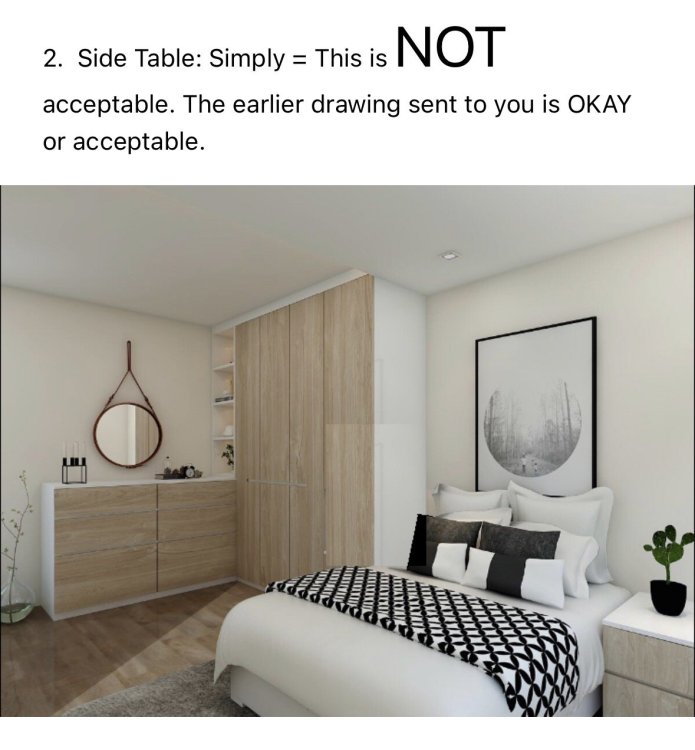
Poison arrow from wardrobe sharp corner
-
Three pieces of clove


-
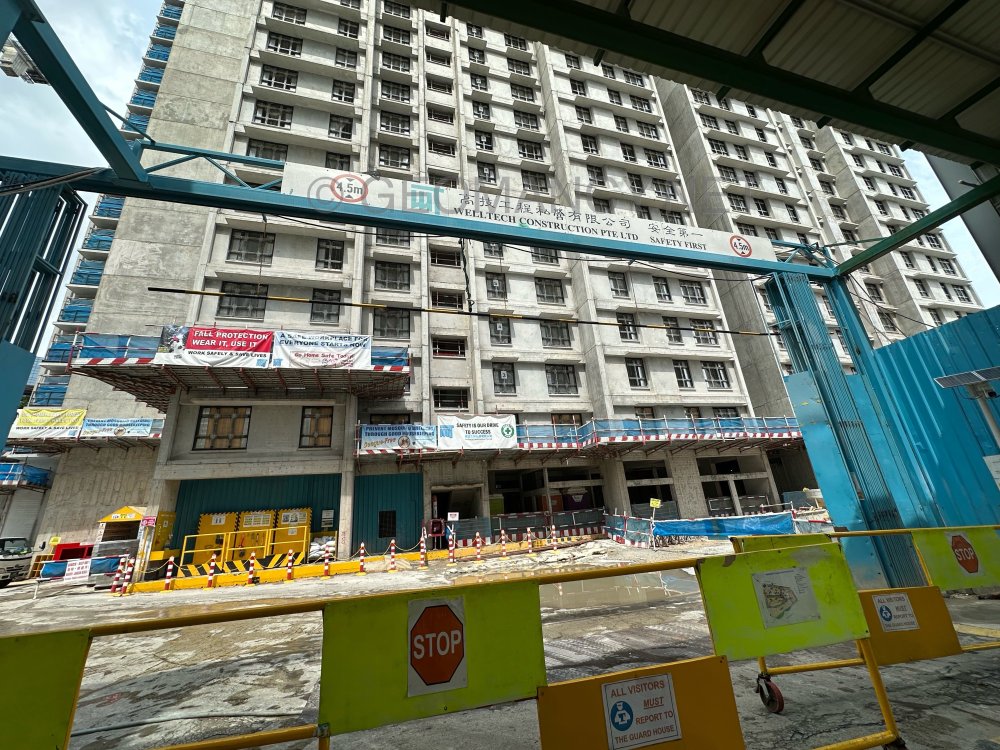
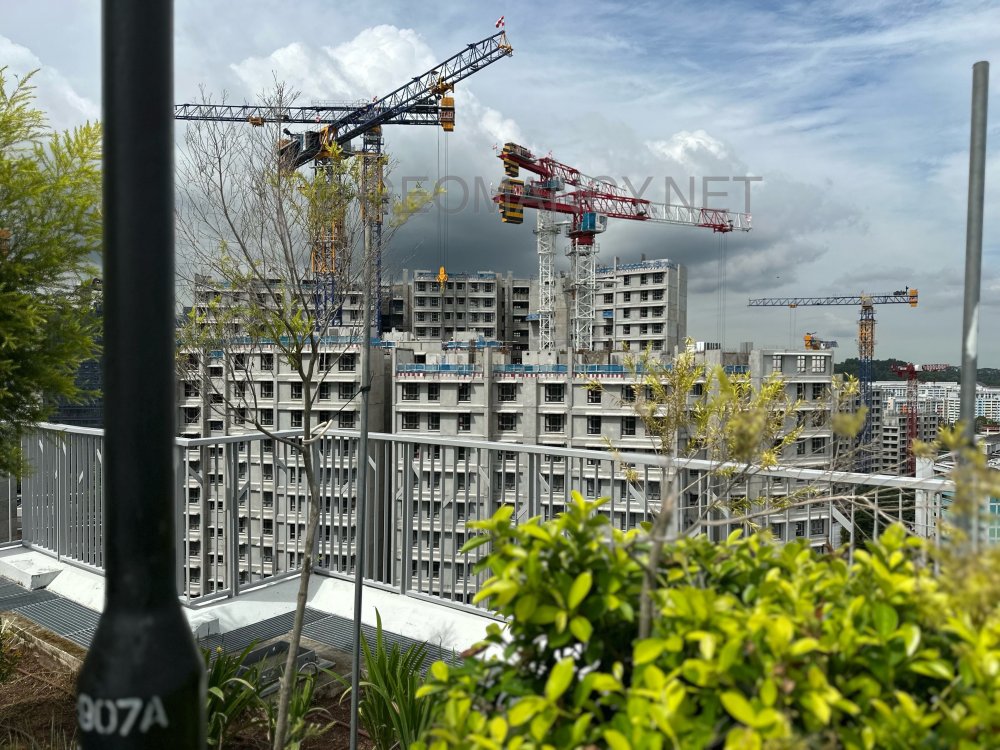
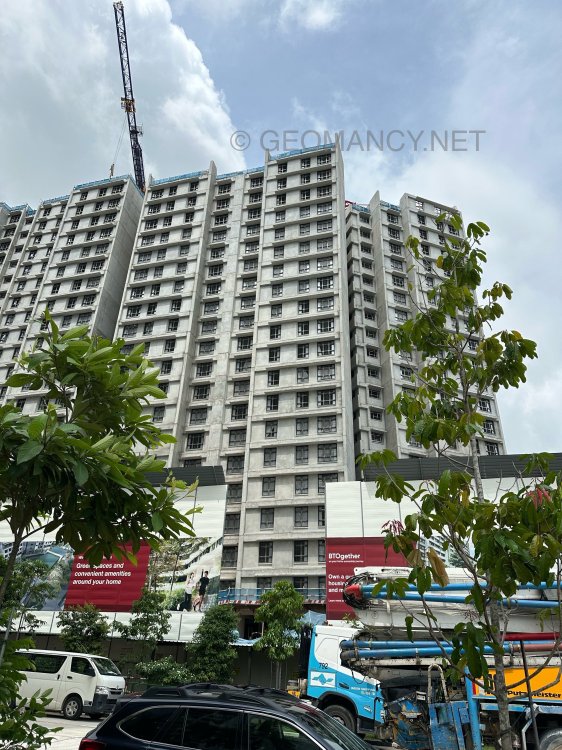
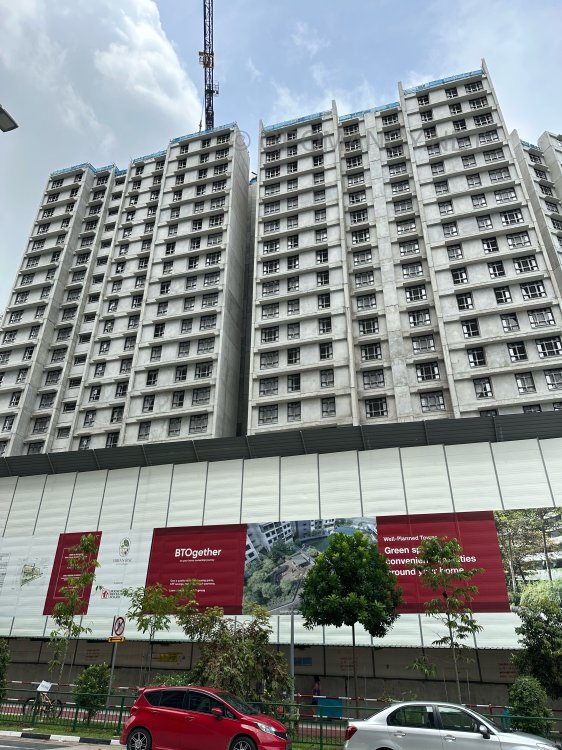
On 2nd July 2026
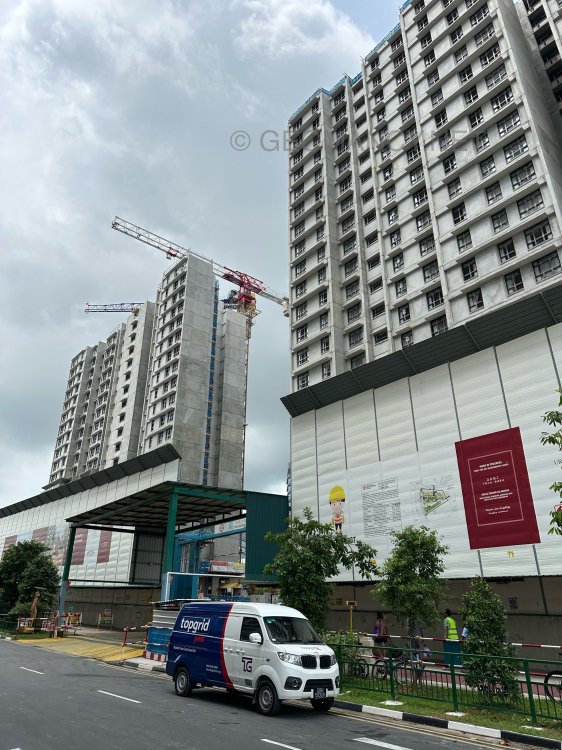
-
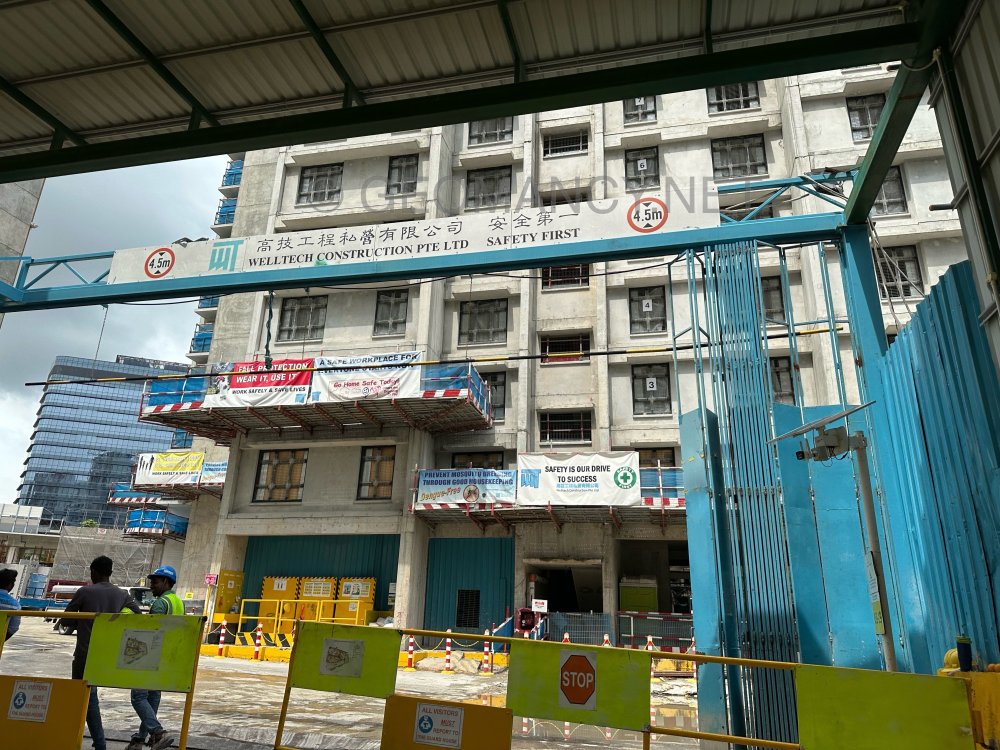
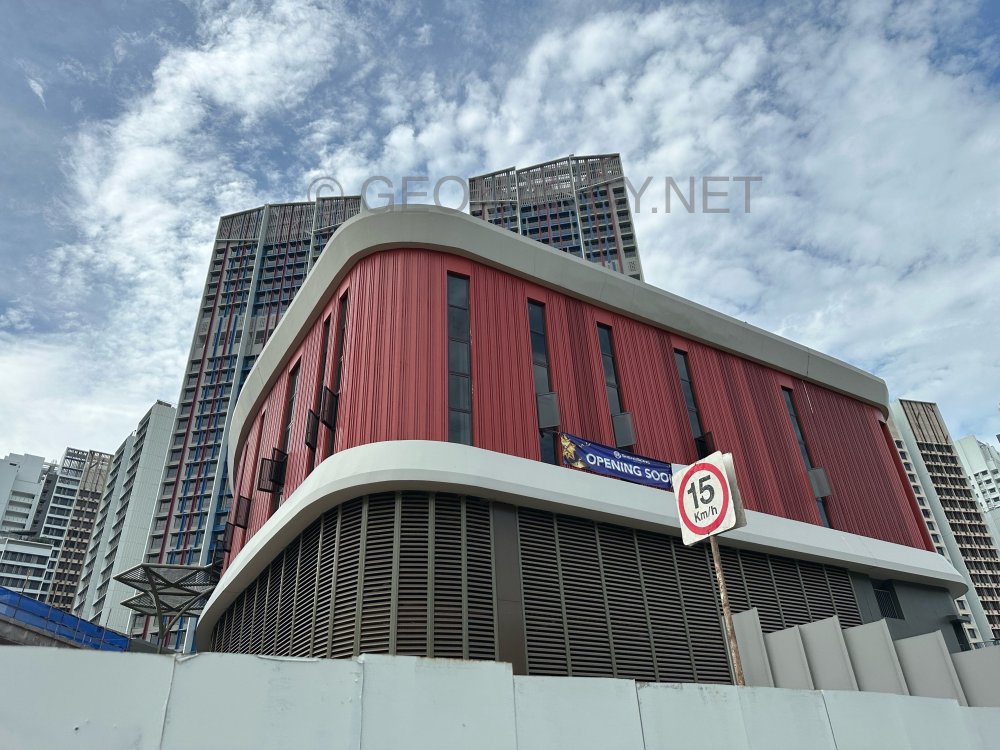
Just T.O.P.
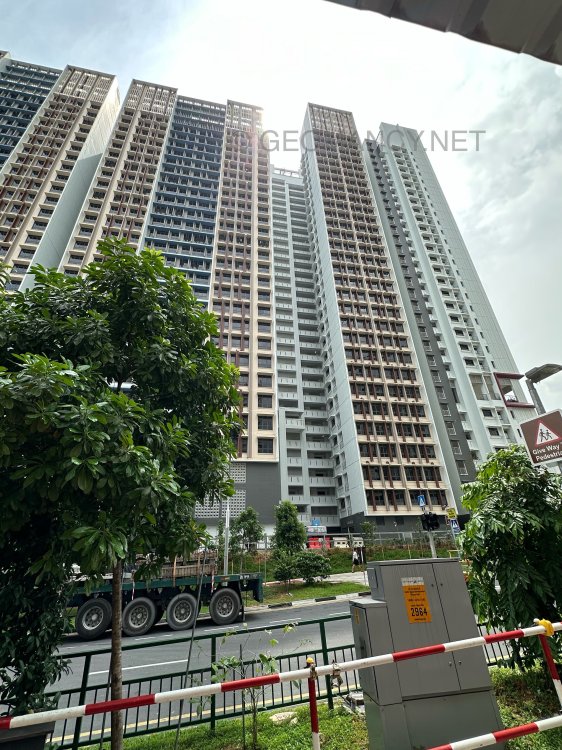

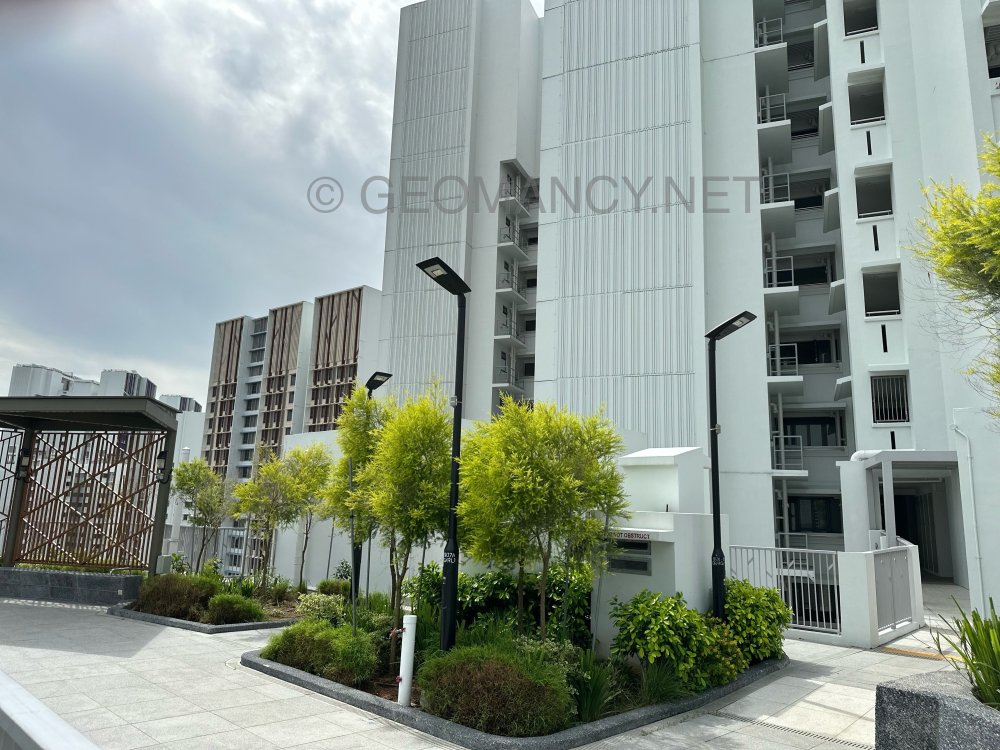








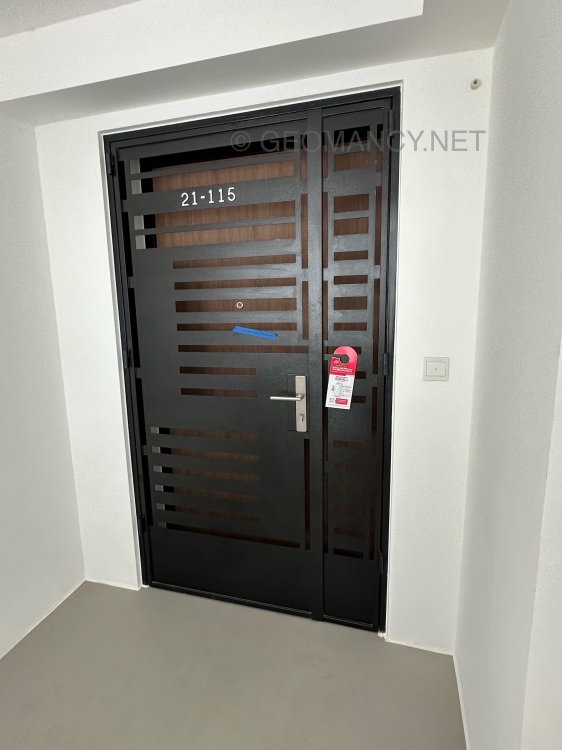



-
On 2nd July 2026